The Kansa wand and the Kansa vatki are the two best loved bronze tools in Ayurvedic self-massage, and choosing between them comes down to where and how you like to work. Both are made of Kansa, the traditional bronze alloy, and both are used with oil to turn a plain application into a slow ritual. This guide sets the Kansa wand beside the Kansa vatki so you can see which suits your routine, or whether you might want both.
What each tool is
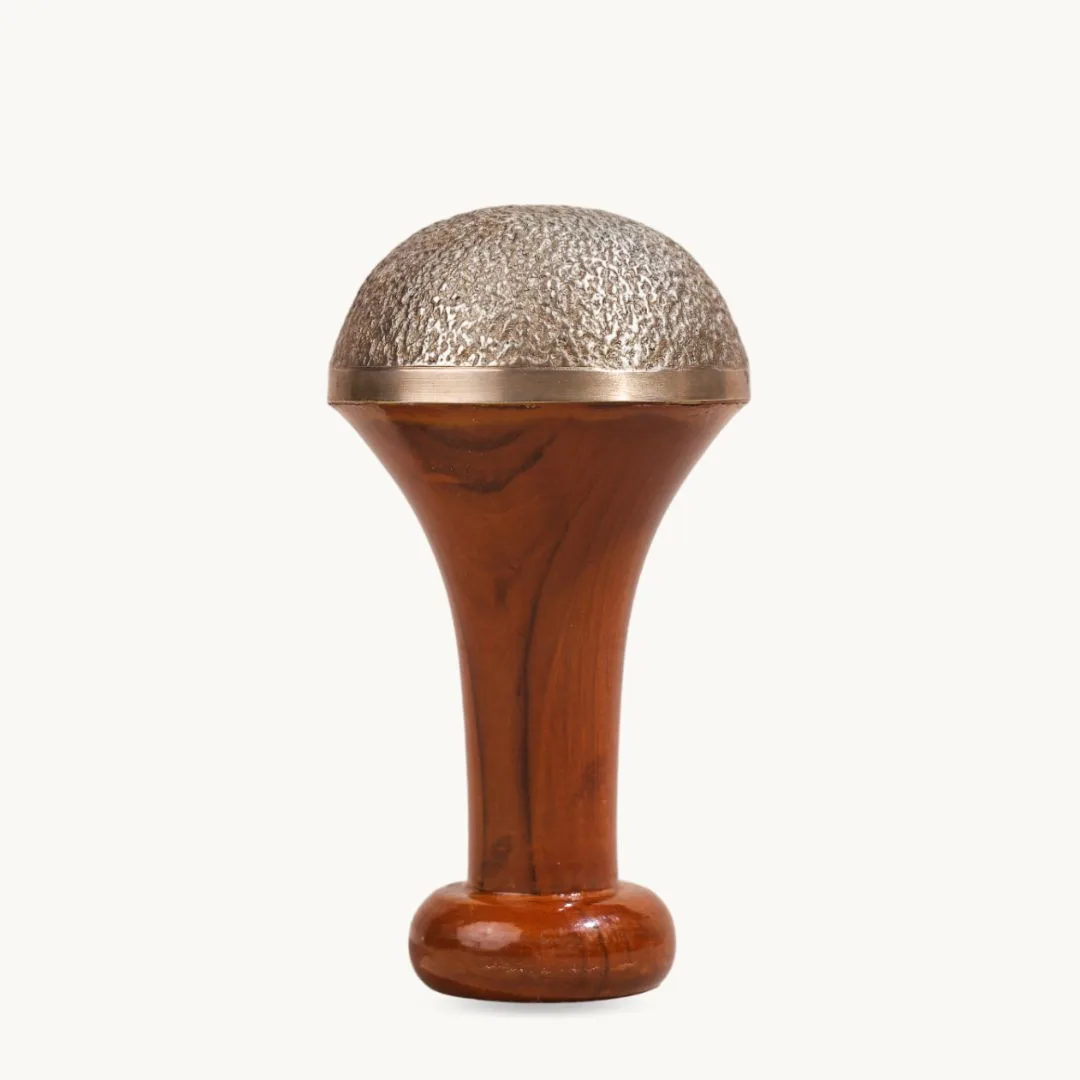
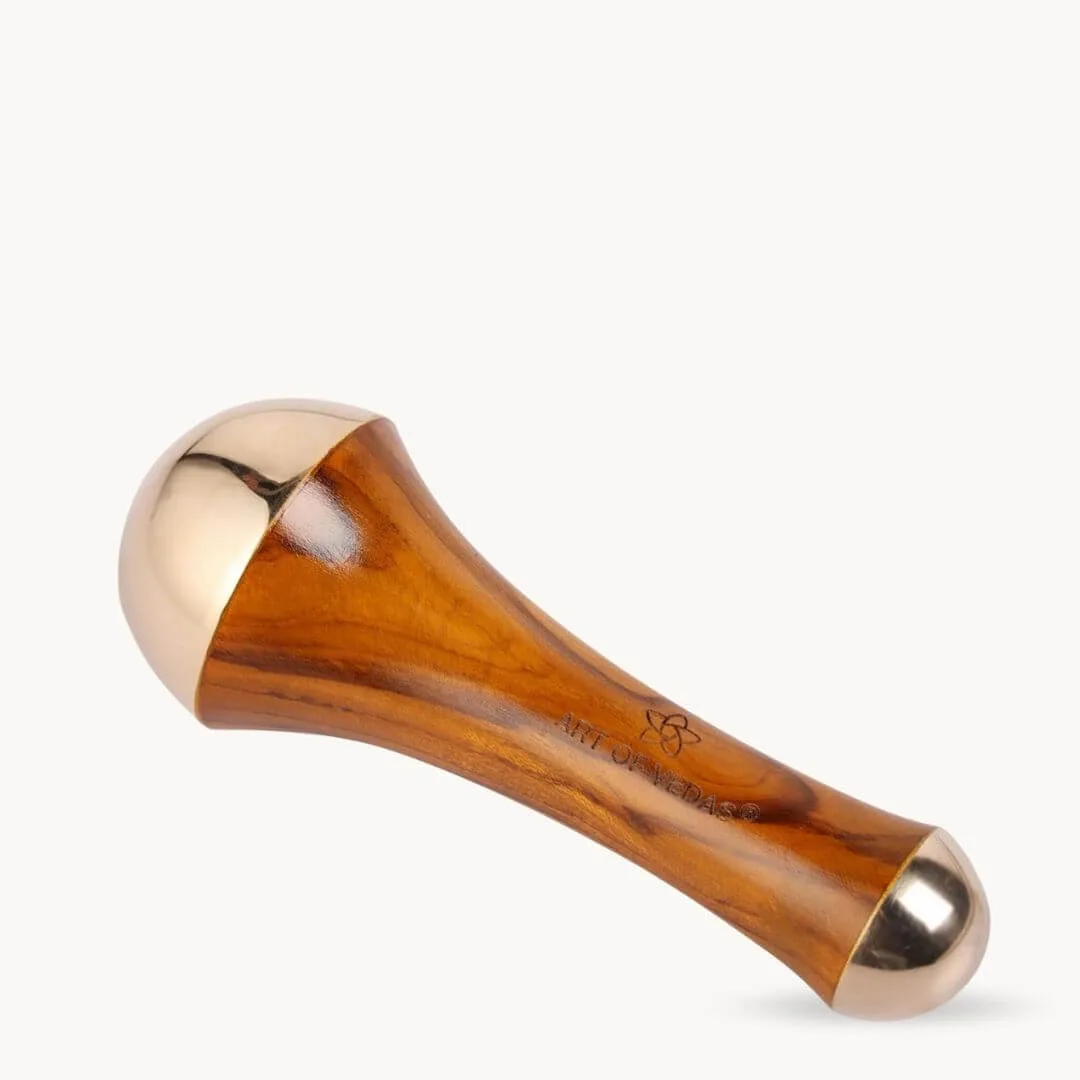
A Kansa wand is a rounded bronze dome on a turned wooden handle, guided over oiled skin in strokes. Its shape makes it precise, easy to steer along the contours of the face or the length of a limb. A Kansa vatki is a small bronze bowl, held in the hand and rubbed gently over an oiled area, most often the soles of the feet. Where the wand offers a focused point of contact and reach, the vatki offers a broad, enveloping surface and a soothing, cupping motion. The two tools express the same tradition in different shapes.
How they are used
The wand is drawn in directional strokes: upward and outward on the face, along the muscles on the body, and around the ankle and sole on the feet. It suits contoured, guided work. The vatki is worked in slow circles, its rounded base held flat to the skin, and it is traditionally reserved for the feet, where its broad contact settles the whole sole at once. Many people find the wand more natural for the face and the vatki more soothing for the feet, though neither is bound to one area.
- Choose the wand for the face, for precise contours and for directional strokes on the body.
- Choose the vatki for a broad, cupping foot ritual at the end of the day.
- The wand reaches small areas like the sides of the nose with ease.
- The vatki covers the whole sole in one grounding motion.
- Both create the same slow, sensory pause when used with warm oil.
The tradition behind the bronze
Both tools sit within Abhyanga, the Ayurvedic ritual of oil massage, and both draw on the long regard Ayurveda holds for bronze. The vatki in particular is associated with the evening foot ritual, a settling practice before sleep, while the wand is the more general tool for face and body. If you want to understand each in depth, read our guide to what a Kansa wand is and the companion Kansa vatki bowl guide.
On craft, the wand is cast bronze buffed to a soft shine and mounted on wood for a comfortable grip, while the vatki is a shaped bronze bowl, sometimes paired with a vatki handle for an easier hold. Both may leave a faint grey trace on the skin, the harmless cosmetic mark of bronze meeting oil, and both age into a natural patina. Wipe each clean after use, dry fully and store away from knocks, and they will serve for years.
Which should you choose?
If you want one versatile tool for the face and body, start with the wand, and our Kansa wand buying guide compares the options. If your heart is set on a grounding foot ritual, the vatki is the classic choice. Many households keep both: the wand for the face by day, the vatki for the feet by night.
Frequently Asked Questions
Is the Kansa wand or vatki better for the face?
The wand. Its rounded dome and handle make it easy to guide along the contours of the face, while the vatki is traditionally kept for the feet.
Can I use the vatki on my face?
It is possible, but the broad bowl suits larger areas like the soles far better. Most people prefer the wand for facial work.
Do I need both tools?
No. Each stands alone. Owning both simply gives you a face tool and a dedicated foot ritual.
Are they made of the same metal?
Yes, both are Kansa, the traditional copper and tin bronze that Ayurveda has long valued.
Why do both leave a grey mark?
It is the natural interaction of bronze with the oil on the skin, a cosmetic effect that wipes away.
For external use only. Not a substitute for professional medical advice.