Ayurveda holds that the same preparation can suit one person well and another less so, depending on their constitution, or Prakriti. Choosing a Kuzhambu is therefore partly a question of Dosha. Most classical Kuzhambus are warming, grounding preparations, which places them naturally within Vata care, though the herbs cooked into each formula shift its character towards different constitutions. This guide sets out how the main Kuzhambus are traditionally chosen. It assumes a basic familiarity with the three Doshas; if you are new to them, the wider Kuzhambu complete guide is a helpful starting point.
Why Constitution Guides the Choice
Vata is cool, light and mobile; Kapha is heavy and slow; Pitta is warm and sharp. A Kuzhambu is dense, warming and slow to absorb, which is why the format as a whole leans towards Vata and, in its more stimulating forms, towards Kapha. For Pitta, the same warmth calls for a lighter hand. Rather than repeat the constitutional detail covered in our dedicated Dosha guides, this page focuses on matching a preparation to a tendency. Our guide to which Kuzhambu to choose looks at the same question from the angle of the region you wish to care for.
Warming Kuzhambus for Vata
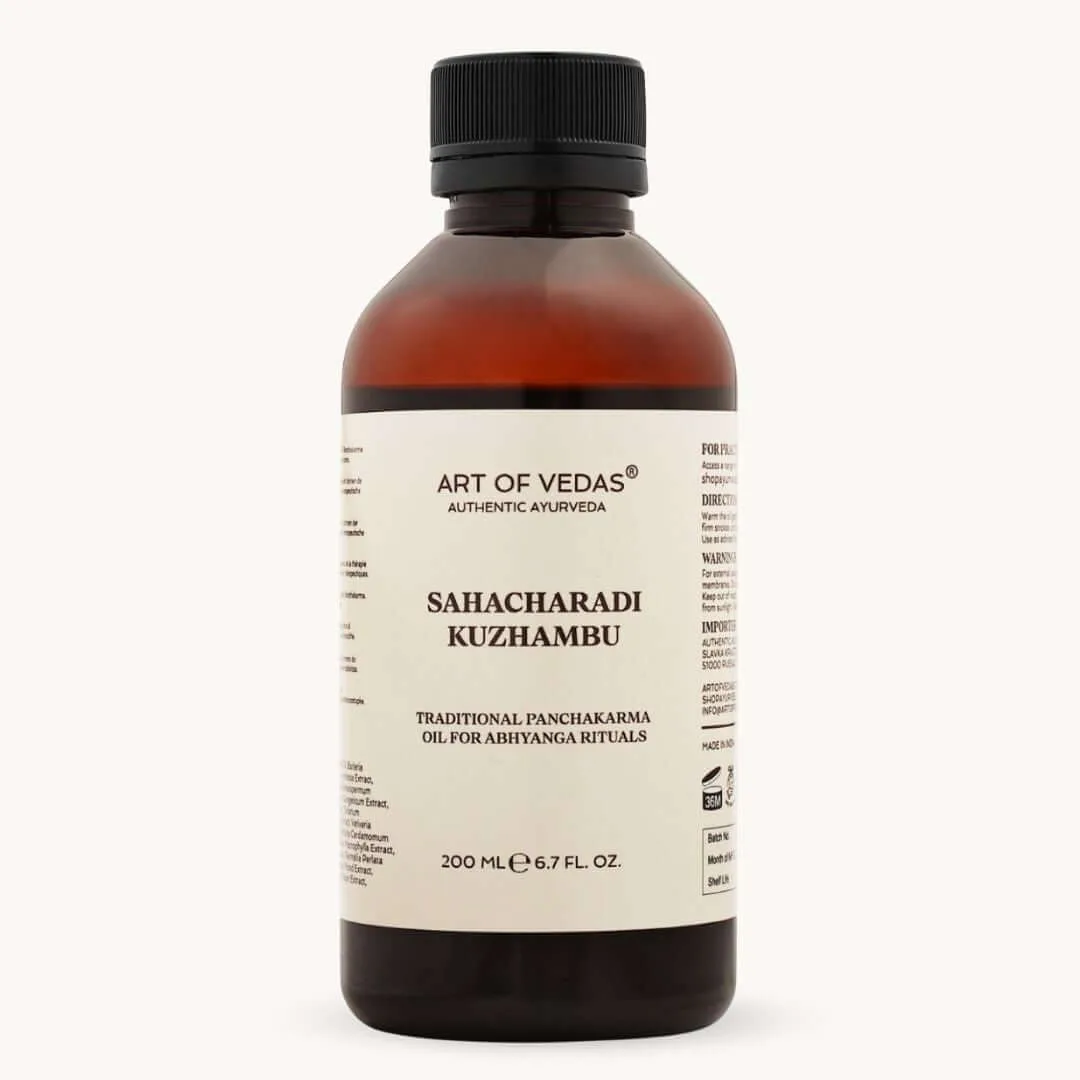
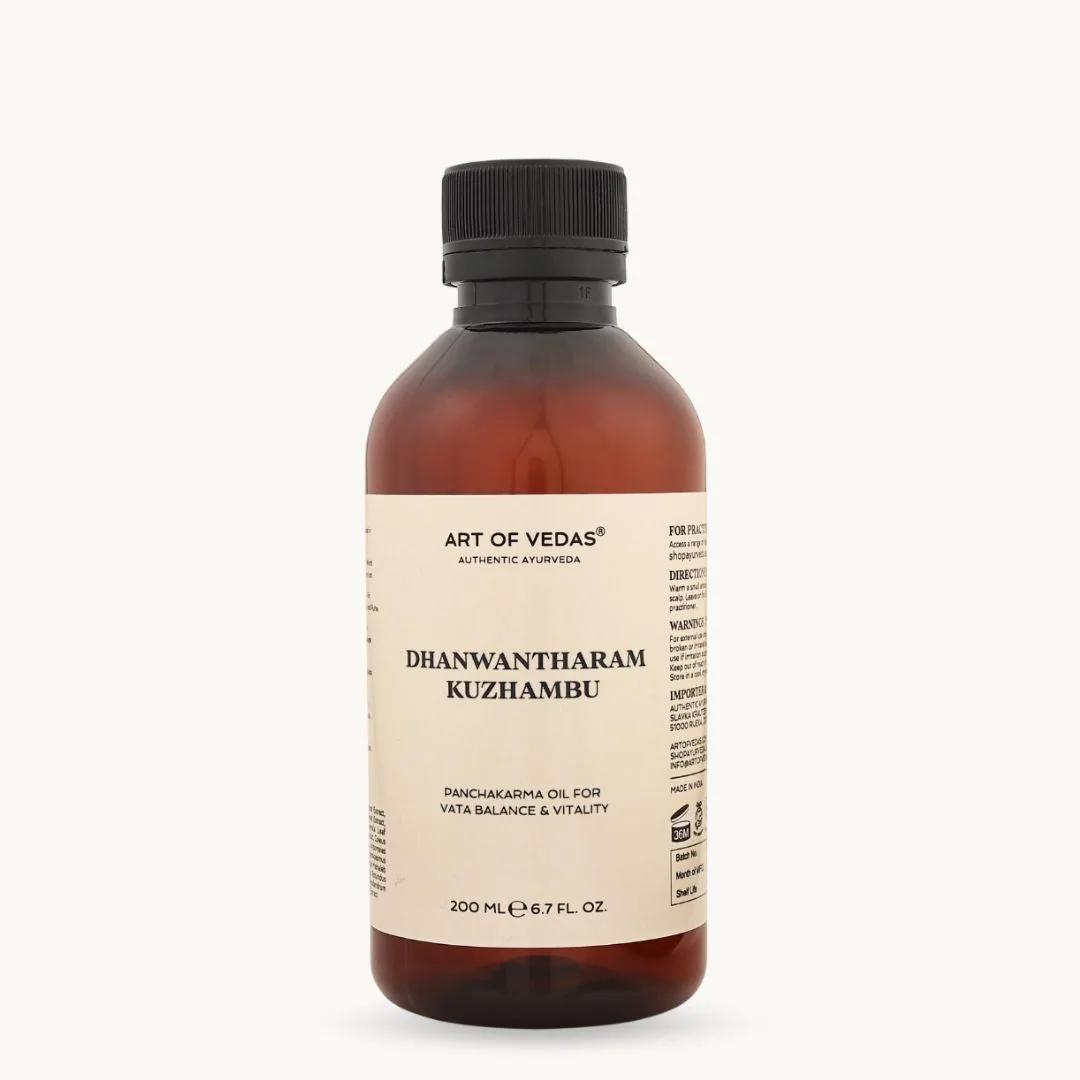
Vata benefits most obviously from the warming, grounding qualities of a Kuzhambu. A Dhanwantharam Kuzhambu is the classic choice, built on the Dhanwantharam formula long associated with settling Vata and caring for the lower back and joints. A Sahacharadi Kuzhambu is another warming preparation traditionally favoured for the legs and lower body. Both suit cooler seasons and evening routines, when Vata tends to rise. For those choosing a liquid oil instead, our selection guide for Vata oils covers the Thailam options.
Stimulating Kuzhambus for Kapha
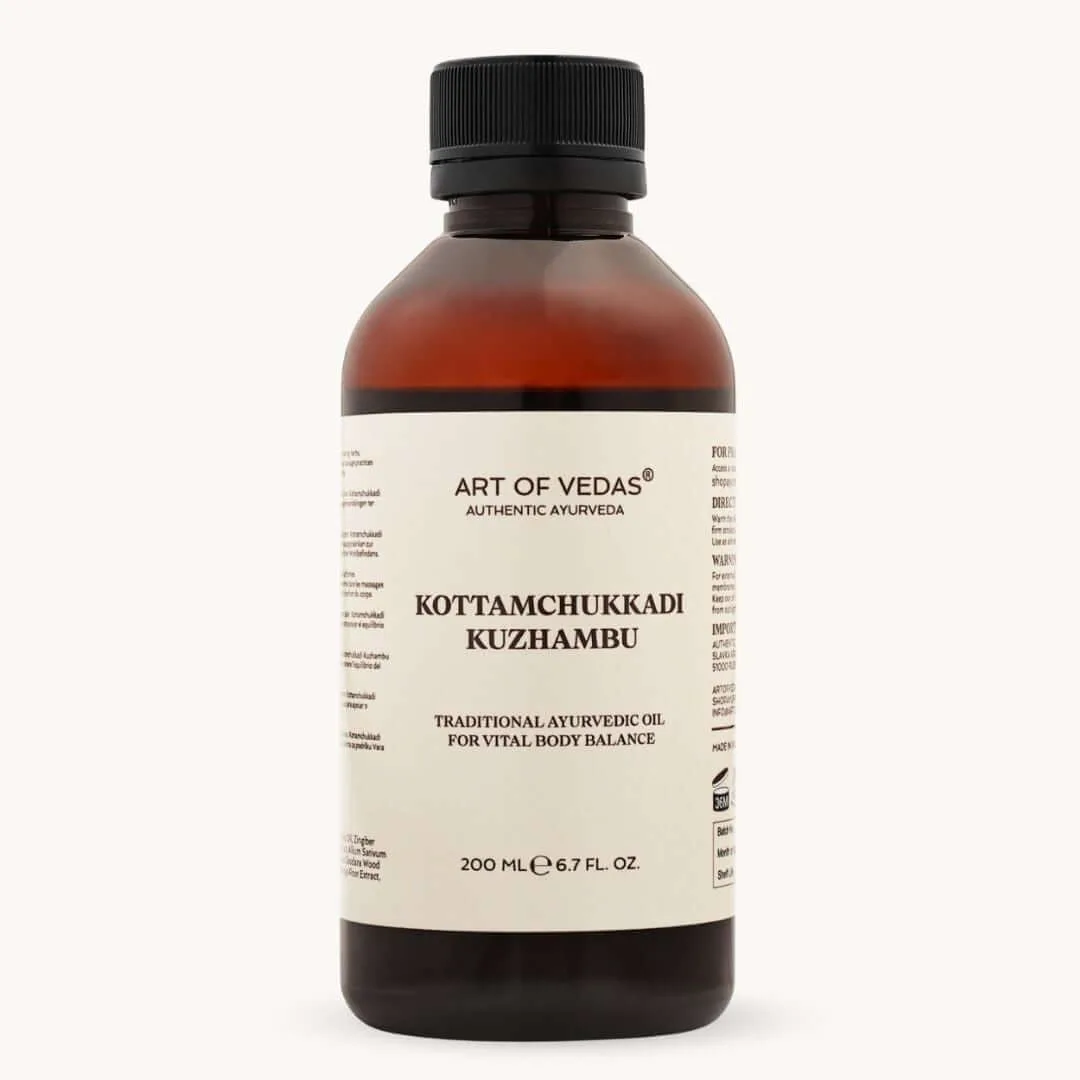
Kapha types generally do well with warmth and with the more stimulating, spice-rich formulas. A Kottamchukkadi Kuzhambu, which carries warming ingredients such as ginger and Kostam, sits well here. Its enlivening character suits the heavier, slower tendency of Kapha, particularly when applied to areas that feel stiff or sluggish. As with all Kuzhambus, a little is worked into the chosen region rather than spread widely.
A Careful Approach for Pitta
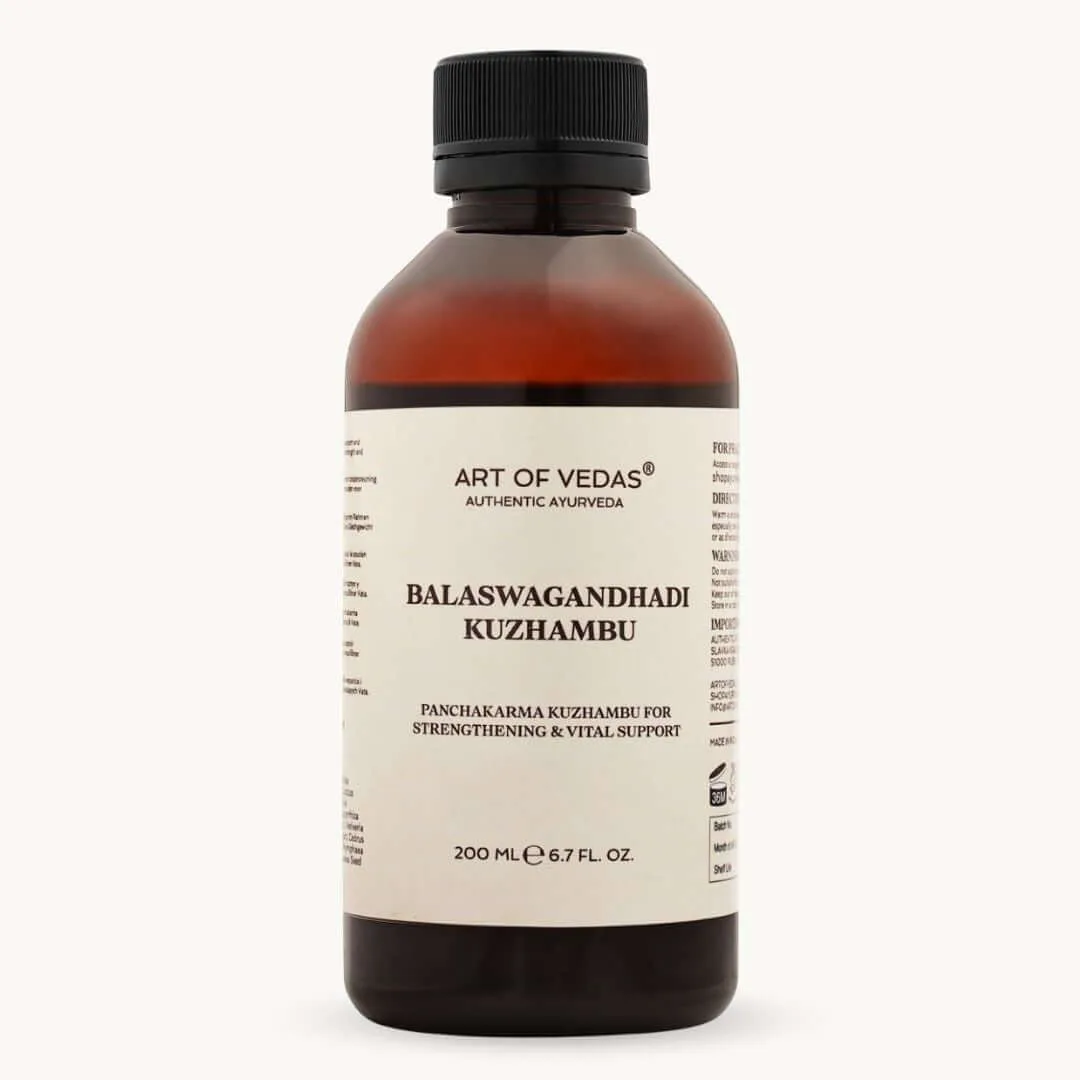
Pitta is already warm, so the warming nature of most Kuzhambus calls for moderation. A Balaaswagandhadi Kuzhambu, built on Bala and Ashwagandha, is among the gentler, more nourishing options and can suit those of Pitta tendency when used sparingly and at cooler times of day. Where a preparation feels too warming, applying less and choosing the cooler parts of the day helps keep the routine comfortable.
Selection at a Glance
| Tendency | Kuzhambu traditionally chosen |
|---|---|
| Vata | Dhanwantharam Kuzhambu, Sahacharadi Kuzhambu |
| Kapha | Kottamchukkadi Kuzhambu |
| Pitta | Balaaswagandhadi Kuzhambu, used sparingly |
A few principles help when choosing by constitution:
- Favour warming, grounding formulas such as Dhanwantharam for Vata tendencies.
- Choose stimulating, spice-rich formulas such as Kottamchukkadi for Kapha tendencies.
- Use warming Kuzhambus sparingly for Pitta, and at cooler times of day.
- Consider the season as well as the constitution, since cool weather raises Vata.
- When in doubt, match the preparation to the region you wish to care for rather than the constitution alone.
In terms of ingredients, each Kuzhambu owes its character to the herbs cooked into the shared three-fat base of sesame, coconut and castor. Dhanwantharam draws on the Dashamula and related Vata herbs; Sahacharadi centres on Sahachara; Kottamchukkadi is built around warming aromatics including ginger and Kostam; and Balaaswagandhadi carries Bala and Ashwagandha. It is these herbal differences, rather than the base fats, that guide the constitutional choice.
Frequently Asked Questions
Is there a Kuzhambu for every Dosha?
Most Kuzhambus are warming and therefore lean towards Vata and Kapha. Pitta types can still use them, but sparingly, since the format as a whole tends to be warming rather than cooling.
Can I use a Kuzhambu that does not match my constitution?
Yes. Constitution is one guide among several. The region you wish to care for and the season also matter, and many people choose a Kuzhambu for a particular area regardless of their Dosha.
Which Kuzhambu is the most versatile?
Dhanwantharam Kuzhambu is the most widely chosen, as its Vata-settling formula suits the cool, mobile tendencies that many people experience, especially in cooler weather.
Does the season change which Kuzhambu I should pick?
It can. Cool, dry weather raises Vata and favours warming formulas, while warmer months may call for a lighter hand, particularly for Pitta tendencies.
How do I know my Dosha?
A constitutional assessment or consultation with an Ayurvedic practitioner is the usual way. This guide is intended to help match a preparation to a tendency, not to replace that assessment.
For external use only. Not a substitute for professional medical advice.