The whole of Punarnava’s name rests on something you cannot see: the root that survives the dry season.
Why the root
The visible plant dies back; the root persists and sends up growth when the rains return. That persistence is what the name renewed again records, and the root is the part the texts specify.
Mula
The Sanskrit for root is Mula, the same word behind Dashamula, the ten roots. Where a text names Mula it means the part that is dug.
Why the part belongs on a label
Because root, leaf and whole plant are different materials from one species. A label naming only Boerhavia diffusa has described half the ingredient, the same argument the Twak guide makes for bark.
On the label
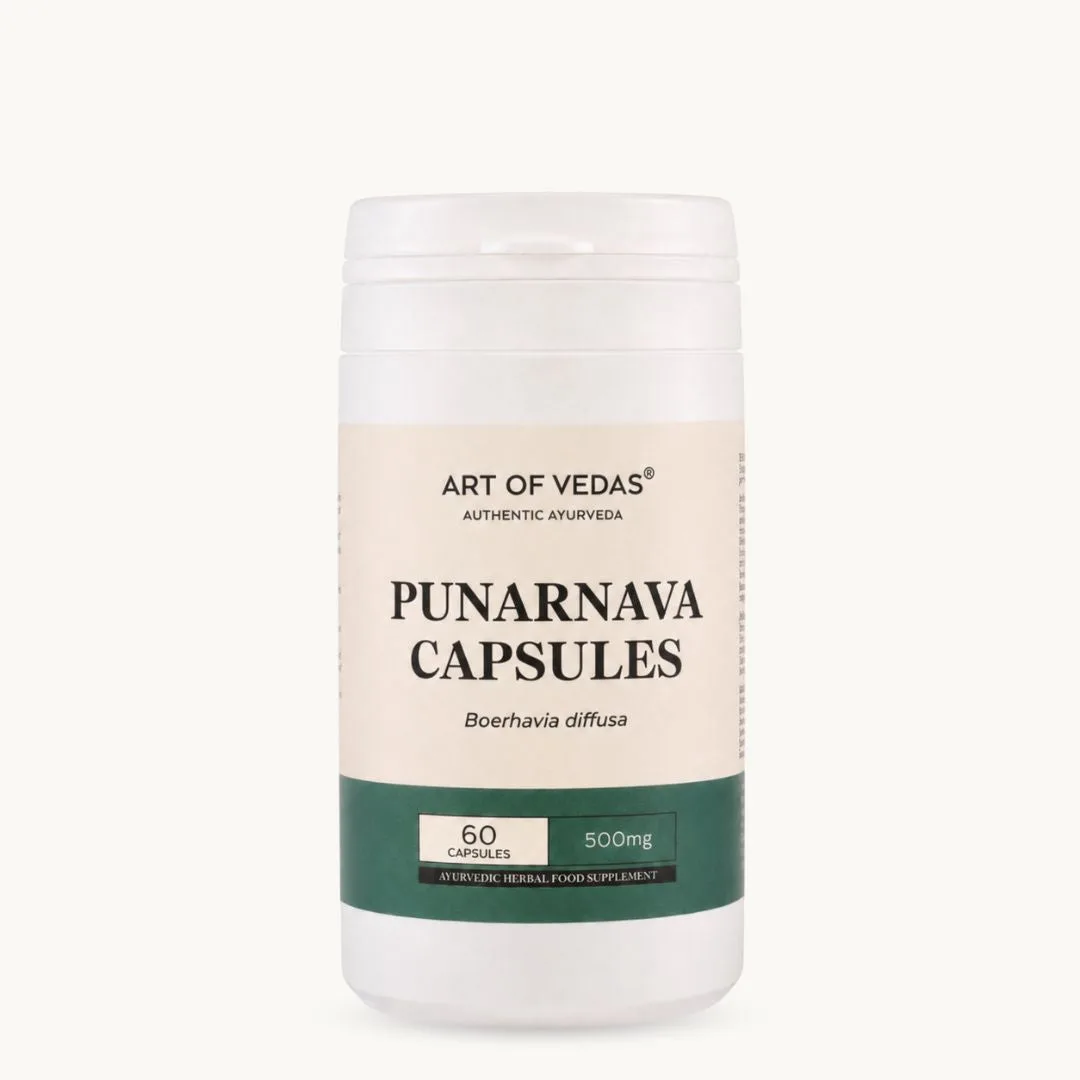
Punarnava Capsules state the species and the part.
Frequently Asked Questions
Which part of Punarnava is used?
The root.
What is Mula?
The Sanskrit for root.
Why does the part matter?
Different parts of one plant are different materials.
This article is for educational purposes and describes the classical Ayurvedic record. The products mentioned are food supplements, not a substitute for a varied, balanced diet, and are not intended to diagnose, treat, cure or prevent any disease. Take them under the guidance of a qualified Ayurvedic practitioner.